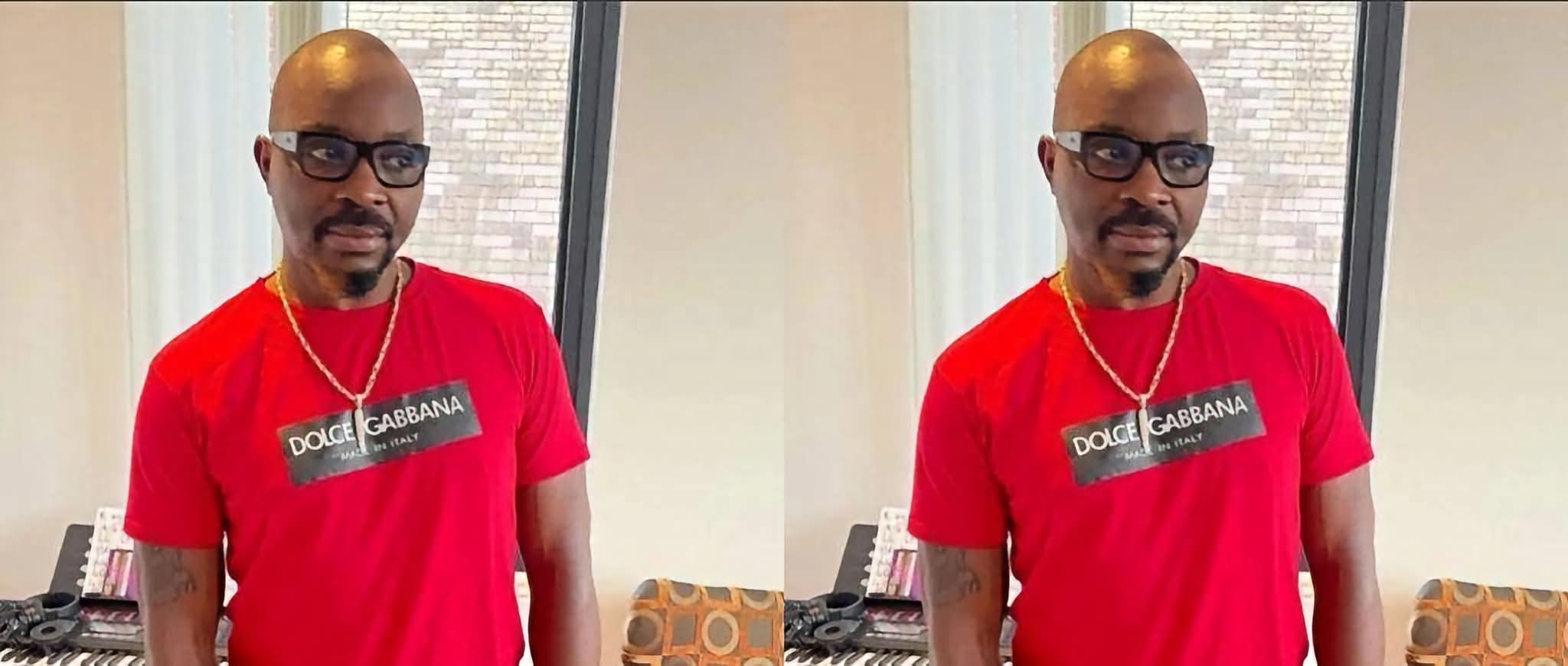
Isaac Fayose, younger brother of former Ekiti State Governor, Ayo Fayose, has lamented being abandoned by politicians he supported in past elections.
He said he now felt like “a lonely voice in the wilderness” after years of personal and financial sacrifice for political figures who later turned their backs on him.
The businessman made this known in a video shared on his Instagram page on Friday. He spoke in a mix of Pidgin English and Yoruba.
Fayose described Nigeria as a bad country and said he now felt like an orphan and a lonely voice in the wilderness.
He recalled his ordeal in 2018 when he stood by his brother during the latter’s face-off with the Economic and Financial Crimes Commission.
Fayose said he personally confronted the then acting EFCC chairman, Ibrahim Magu, over the matter, adding that he followed his brother to the commission and protested against Magu.
Ayo Fayose was arraigned by the EFCC in 2018 over alleged fraud linked to his tenure as governor and later regained his freedom on bail.
He was succeeded that October by Kayode Fayemi of the All Progressives Congress, who defeated the PDP candidate in the governorship election.
Isaac said the matter was still trailing him in court to this day, even as his brother’s child was set to be sworn in as a member of the Ekiti State House of Assembly.
He said he was now facing his problems alone despite having supported his brother and other politicians in the past.
Fayose also spoke about the personal cost of his political involvement, saying he cut short his mourning to answer a call for help ahead of the 2026 Ekiti governorship election.
He recalled that while he was burying his wife, Wole Oluyede called him and appealed to him to join the effort to “take our state back.”
Fayose said he responded to the call, hurriedly completed the burial and returned home, where he spent his money and did everything he could to support the campaign ahead of the election.
He was referring to Wole Oluyede, the PDP governorship candidate for the June 20, 2026 Ekiti election.
Oluyede’s path to the poll had been turbulent, as his November 2025 primary victory was nullified by a Federal High Court, while INEC later excluded his name from its candidate lists over the PDP’s national leadership crisis. His camp, however, went to court to compel his inclusion.
He is running against the incumbent, Biodun Oyebanji of the APC, who is seeking a second term.
Isaac said Oluyede had since distanced himself from him, adding that he had not returned to greet him after the election period.
He also said Oluyede had gone back to President Bola Tinubu, while the governor he had been fighting against was now taking pictures with him.
Isaac also referenced Osun State’s governorship politics, recalling the 2022 election and the more recent election held on August 15, 2026.
He said he suffered significant personal consequences from his involvement in the 2022 election, when Ademola Adeleke won the governorship on the platform of the PDP, defeating the then incumbent, Gboyega Oyetola of the APC.
Fayose said he was also drawn into Adeleke’s re-election campaign in 2026 despite being in Australia when the governor contacted him and asked him to join the campaign.
He said he put everything into the campaign and supported Adeleke’s bid.
Adeleke, who has since defected from the PDP to the Accord Party, was declared winner of the August 15 election by INEC, polling 511,067 votes to defeat the APC’s Bola Oyebamiji, who scored 444,815.
Isaac said Adeleke travelled to Abuja six days after the election to show his Certificate of Return to President Bola Tinubu, describing the development as a betrayal of the loyalty he had shown during the campaign.
He said the development made him feel alone.
Drawing a comparison with political reconciliations elsewhere, Fayose cited the public rapprochement between singer Davido and Rivers State-born Federal Capital Territory Minister, Nyesom Wike.
He said Davido and Wike, whom he claimed had previously been at odds, were now embracing and smiling together.
Isaac said he had rejected cash and a Mercedes-Benz G-Wagon offered to him during past elections, insisting that his interest was in the welfare of his people rather than personal gain.
He, however, decried the practice of vote-selling among the electorate, saying some people still sold their votes despite the sacrifices made on their behalf.
Fayose said he had become isolated in speaking out about what he described as the problems facing the country.
He said he now felt like the only person seeing what was happening in Nigeria and described his situation as being “lonely at the top.”