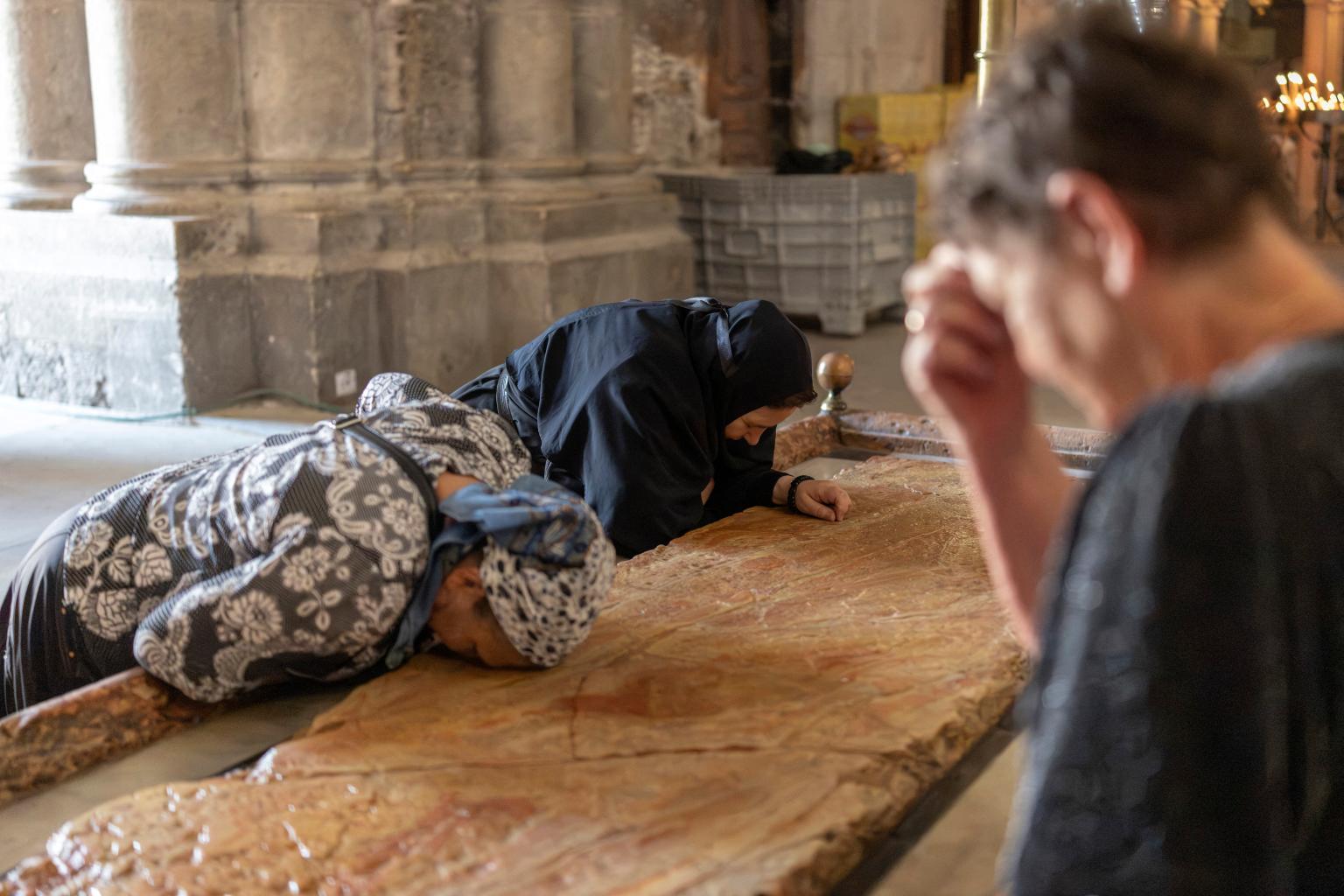
Italian archaeologists have uncovered an ancient landscape beneath Jerusalem’s Church of the Holy Sepulchre, which they say contains features consistent with biblical descriptions of the place where Jesus Christ was buried.
The findings were published in a preliminary study in the Jerusalem archaeological journal Liber Annuus.
The researchers had been excavating the Church of the Holy Sepulchre, a fourth-century Roman church built over a site traditionally believed by many Christians to be where Jesus was crucified, buried and resurrected.
The site attracts millions of Christian pilgrims from around the world each year.
During the final phase of excavations in 2025, the archaeological team uncovered an abandoned quarry beneath the church, along with cultivated areas, rock-cut tombs and what appeared to be an ancient garden.
Lead archaeologist Francesca Romana Stasolla of the University of Rome La Sapienza said the discovery provided evidence of a funerary landscape.
The findings appeared to correspond with the account in the Gospel of John, which describes a garden near the location where Jesus was crucified and a new tomb where no one had previously been buried.
The researchers said the location also appeared to match other biblical descriptions. John places the crucifixion near Jerusalem, while the Book of Hebrews describes it as occurring outside the city gate.
According to the researchers, parts of the quarry were about 20 feet deep and had been filled with soil, suggesting that the area was later used for agricultural purposes.
Evidence of olive trees and grapevines dating to around the period traditionally associated with Jesus’ death, believed to have occurred around AD 33, was also discovered at the site.
Stasolla said the cultivated areas identified by the researchers appeared to correspond with the green area described in the Gospel of John as being between Calvary and the tomb.
The archaeologists also found graves cut directly into the rock, which they said were consistent with the descriptions of Jesus’ tomb in the Gospels of Matthew, Mark and Luke.
Further evidence came from a chamber that had been blocked by a Roman structure constructed during the reign of Emperor Hadrian in the second century.
About two centuries later, workers associated with Emperor Constantine reportedly removed the Roman structure and excavated the area, exposing the tomb and separating it from the surrounding chambers.
The researchers stressed that the discoveries do not definitively establish that the site was the burial place of Jesus.
However, they said the efforts by early Christian communities to preserve and distinguish the site suggested that knowledge of its religious significance may have been passed down through generations.
Stasolla said the broader significance of the discovery lies in the history of the people who preserved the site and expressed their faith there.
She added that regardless of whether people accept the historical identification of the Holy Sepulchre, the fact that generations of Christians believed in its significance was itself an established part of Jerusalem’s history.