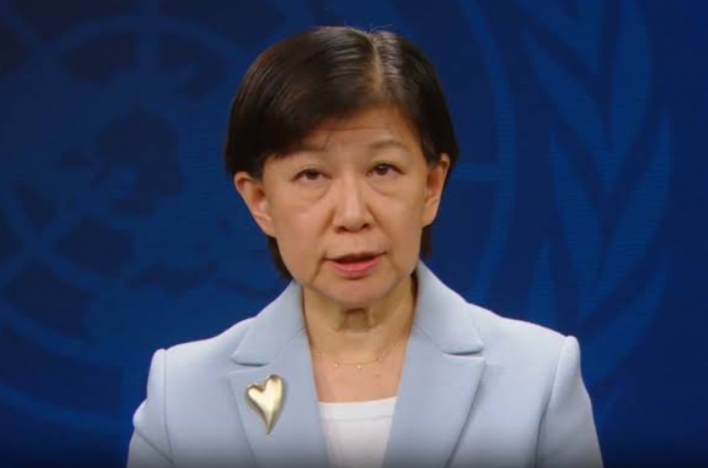
The United Nations has revealed that weapons looted during the 2011 Libyan conflict later found their way into the hands of extremist groups operating in Nigeria and other countries in the Sahel region.
The disclosure was made by the UN Under-Secretary-General and High Representative for Disarmament Affairs, Izumi Nakamitsu, during a discussion on the global proliferation of illicit firearms and their implications for peace and security at the UN Headquarters in New York.
Nakamitsu warned that arms diverted or stolen during armed conflicts often continue to fuel violence long after hostilities have ended, contributing to terrorism, organised crime and instability across national borders.
She explained that weapons looted during and after the uprising that led to the fall of former Libyan leader, Muammar Gaddafi, subsequently surfaced in several Sahel countries, including Niger, Burkina Faso and Nigeria.
According to the UN official, some of the weapons were later recovered from extremist groups, highlighting how arms originating from one conflict can continue to threaten security in neighbouring countries years after the war has ended.
Nakamitsu noted that the end of a conflict does not necessarily halt the circulation of weapons used during the crisis, stressing that such arms often remain in circulation and continue to cause harm.
She further stated that the continued spread of illicit firearms poses a significant challenge to peacebuilding efforts, particularly in fragile and conflict-affected regions.
The UN disarmament chief explained that weapons retained by armed groups, militias and even local communities for self-defence purposes frequently contribute to renewed cycles of violence and insecurity.
She also linked the proliferation of small arms and light weapons to terrorism, human rights abuses, gender-based violence and other humanitarian concerns, describing the issue as one that extends beyond security to development and peacebuilding.
Nakamitsu observed that weapons used during armed conflicts often remain outside government control after wars end, allowing them to be hidden, smuggled across borders and used in criminal activities.
The UN official additionally warned about emerging challenges associated with illicit arms trafficking, including the growing use of ghost guns, 3D-printed firearms and increasingly sophisticated smuggling networks.
According to her, the trafficking of disassembled firearms and weapon parts has made it more difficult for authorities to trace and intercept illegal weapons.
The United Nations has consistently expressed concern over the proliferation of small arms and light weapons in the Sahel region, warning that the trend continues to fuel armed conflict, terrorism, organised crime and regional instability.