
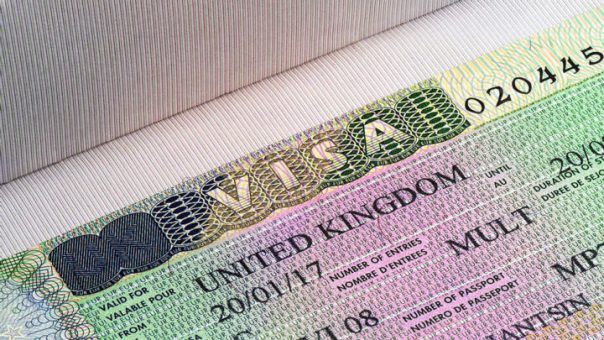
UK – The United Kingdom has imposed an emergency restriction on sponsored study visas for citizens of Afghanistan, Cameroon, Myanmar, and Sudan due to a significant increase in asylum applications from individuals who entered the country legally.

The UK Home Office announced the measure, which also suspends skilled worker visas for Afghan nationals.
It was gathered that the changes will be introduced through an amendment to the Immigration Rules on March 5, 2026, and will come into effect from March 26, 2026.
Home Office data shows that 133,760 people claimed asylum after arriving through legal routes over the past five years. Since 2021, nearly 135,000 individuals entered on student or other visas before applying for asylum.
Asylum claims from legal entry routes now represent almost 40 per cent of total applications. In 2025, such claims accounted for 39 per cent of the 100,000 asylum applications recorded.
Applications from students of the four affected countries rose by more than 470 per cent between 2021 and 2025. Claims from Myanmar increased sixteen-fold during the period, while those from Cameroon and Sudan rose by over 330 per cent.
For Afghan nationals, asylum claims between 2021 and September 2025 equalled 95 per cent of the study visas issued to them.The number of Afghans on work visas who later claimed asylum now exceeds the number of visas issued.
Although student asylum claims fell by 20 per cent in 2025, individuals who arrived on study visas still make up 13 per cent of current asylum cases.
Many asylum seekers who entered legally receive public accommodation and support. Asylum support costs exceed £4 billion annually, with nearly 16,000 nationals from the four countries currently supported by taxpayers, including more than 6,000 housed in hotels.
The government has reduced the asylum support bill by £1 billion since taking office.
A Home Office spokesperson explained that the government is addressing visa abuse to protect the UK’s tradition of supporting genuine refugees.
The announcement aligns with broader asylum reforms implemented this week. Refugee status for adults and their accompanying children will now be reviewed every 30 months instead of the previous five-year period before eligibility for indefinite leave to remain and citizenship.
Refugees from countries classified as safe will be expected to return home. Unaccompanied children will continue to receive five years’ leave pending a long-term policy review.
Existing cases will be assessed under the previous system.The reforms aim to reduce pull factors associated with small boat crossings and draw inspiration from Denmark’s strict migration framework.
Home Secretary Shabana Mahmood is scheduled to introduce new legislation this week and deliver a policy speech at the Institute for Public Policy Research, explaining how the changes reflect British values.
The measures follow a firmer diplomatic approach by the Prime Minister to ensure compliance with migration rules. In November 2025, Mahmood warned Angola, Namibia, and the Democratic Republic of Congo that visas could be suspended unless those governments cooperated on returns of illegal migrants.
Negotiations led to the resumption of return flights.The government has committed to expanding capped safe and legal migration routes once the asylum system stabilizes.
Since 2021, the UK has resettled more than 37,000 Afghans under two schemes, while 190,000 humanitarian visas were issued in 2025.
Between 2010 and 2025, Britain ranked sixth globally in resettling refugees referred by the UNHCR.Migration continues to be a major political issue in the UK, with parties such as Reform UK gaining support in recent opinion polls.
Similar Cases of Visa Restrictions Linked to Asylum Concerns
Several countries have previously imposed targeted visa restrictions or suspensions due to high asylum conversion rates from legal entrants:
In 2023, Canada suspended study permit processing for residents of certain provinces and introduced stricter financial proof requirements after a surge in asylum claims from international students.
Australia in 2022 tightened student visa rules for applicants from high-risk countries following reports of visa holders transitioning to asylum claims, leading to a 20 per cent drop in approvals from affected nations.
Germany in 2024 imposed additional checks and temporary halts on certain visa categories for nationals from countries with high overstay and asylum rates, particularly in response to irregular migration patterns.
The United States in 2021 expanded visa interview requirements and refusal rates for applicants from countries with elevated asylum grant rates, citing abuse of non-immigrant visas.
New Zealand in 2025 introduced a points-based system for student visas and suspended certain categories for nationals from specific regions after asylum claims from students rose sharply.
These measures often aim to curb perceived visa misuse while maintaining humanitarian commitments, though they frequently spark debates on fairness, discrimination, and access to education.
