
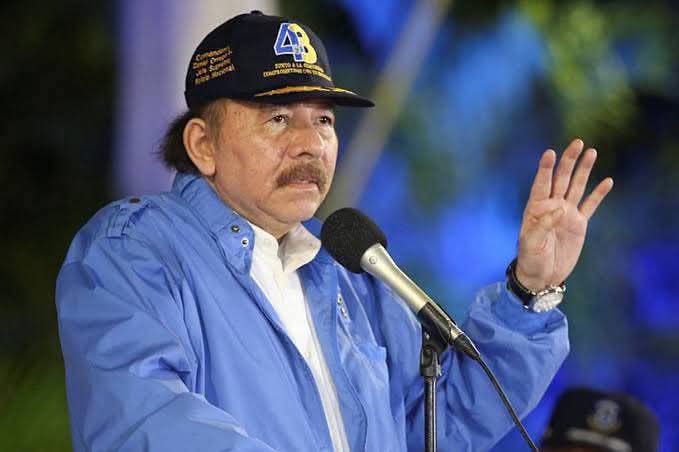
Nicaraguan President Daniel Ortega has declared that the country will no longer conduct elections, signalling an end to electoral contests and further tightening the political control he shares with his wife, Rosario Murillo.

The 80-year-old leader, who has remained in office since returning to power in 2007 after serving as president during the 1980s, said the decision would prevent the opposition from using elections to gain control of the government. However, he did not explain how the policy would be implemented.
Speaking on Sunday evening during the commemoration of the 1979 Sandinista revolution, in which he helped overthrow the US-backed Anastasio Somoza dictatorship, Ortega declared that there would be no further elections in Nicaragua for the opposition to use as a means of taking over the government.
He also insisted that the era of parties backed by the United States and supporters of the Somoza regime returning to power had ended permanently. The event marked his first public appearance in two months.
The US State Department did not immediately comment on Ortega’s remarks. The administration of President Donald Trump has repeatedly described Ortega’s government as a dictatorship and has imposed sanctions on more than 2,350 Nicaraguan officials and members of their families.
Ortega secured another term in the 2021 presidential election, a vote that drew widespread criticism after opposition figures, business leaders and government critics were detained or silenced ahead of the polls.
His grip on power was strengthened further last year through constitutional amendments that named Murillo as “co-president” and increased the presidential tenure to six years. The couple now exercises extensive authority over key state institutions, including the military and the judiciary.
The UN Human Rights Council has accused Ortega and Murillo’s government of transforming the country “into an authoritarian state” and systematically violating human rights. In 2018, Ortega responded to widespread anti-government protests with a crackdown in which more than 300 people were killed.
Political analysts and opposition figures living outside Nicaragua said Ortega’s latest declaration confirms the country’s transition into a system dominated by the president and his wife while exposing their concerns about any future opposition challenge.
Tiziano Breda, a senior analyst at Armed Conflict Location & Event Data, a nonprofit that tracks political violence, said Ortega and Murillo appeared to fear that even the slightest political opening could create room for dissent and threaten their hold on power.
He added that instead of staging another manipulated election, they had chosen to eliminate electoral competition entirely, describing Nicaragua as a full-fledged family-run dictatorship.
Felix Maradiaga, a former opposition presidential hopeful who was imprisoned in Nicaragua from 2021 to 2023 before being expelled to the United States, said Ortega’s comments reflected fear rather than strength.
According to him, the president had openly admitted that his real intention was to prevent his authoritarian rule from facing any democratic challenge.
Salvador Marenco, coordinator of the Costa Rica-based Nicaragua Nunca Más Human Rights Collective, said Ortega had already dismantled meaningful political competition during the presidential elections of 2011, 2016 and 2021.
Marenco added that last year’s constitutional reforms had effectively created a one-party political system, with opposition leaders either imprisoned or forced into exile.
He said Ortega was seeking to avoid the possibility of an electoral defeat because he knew the people no longer supported him.
(CNN/Tribune)