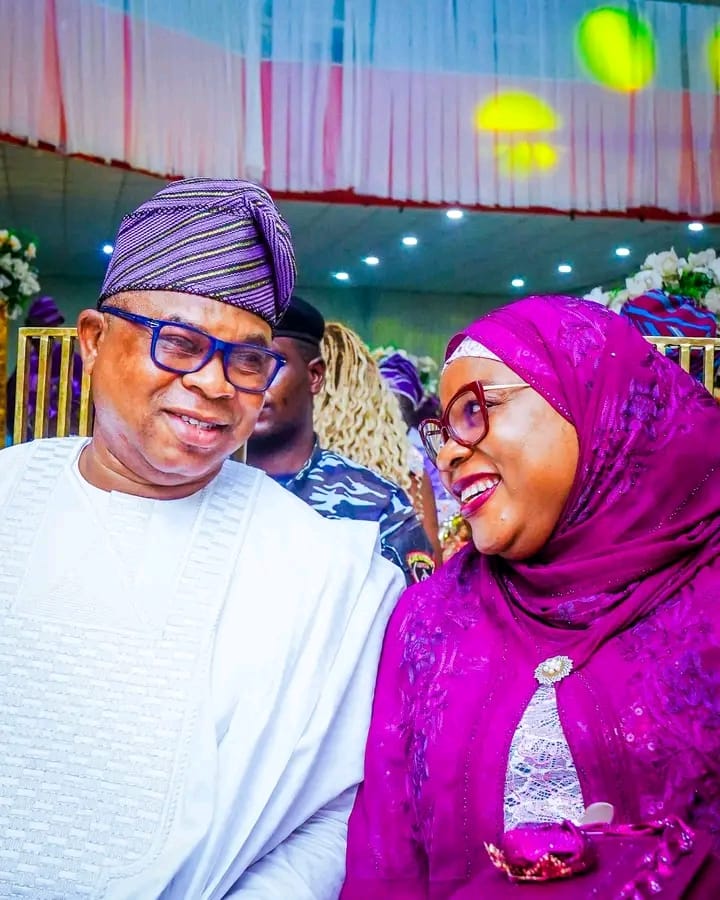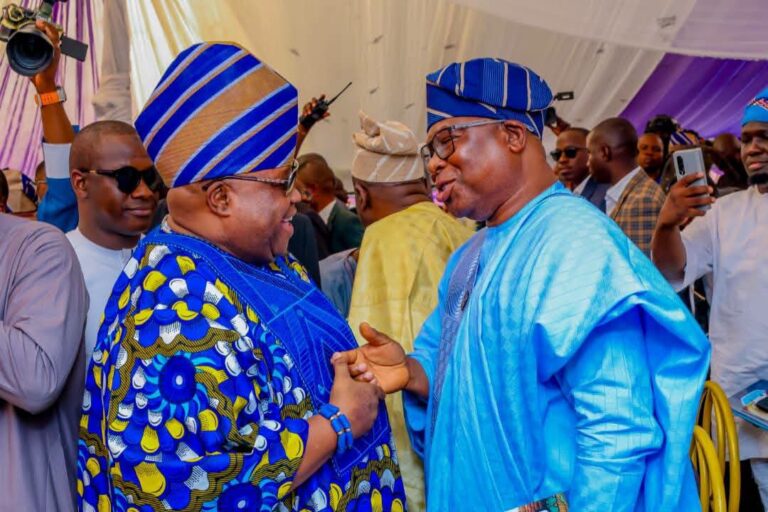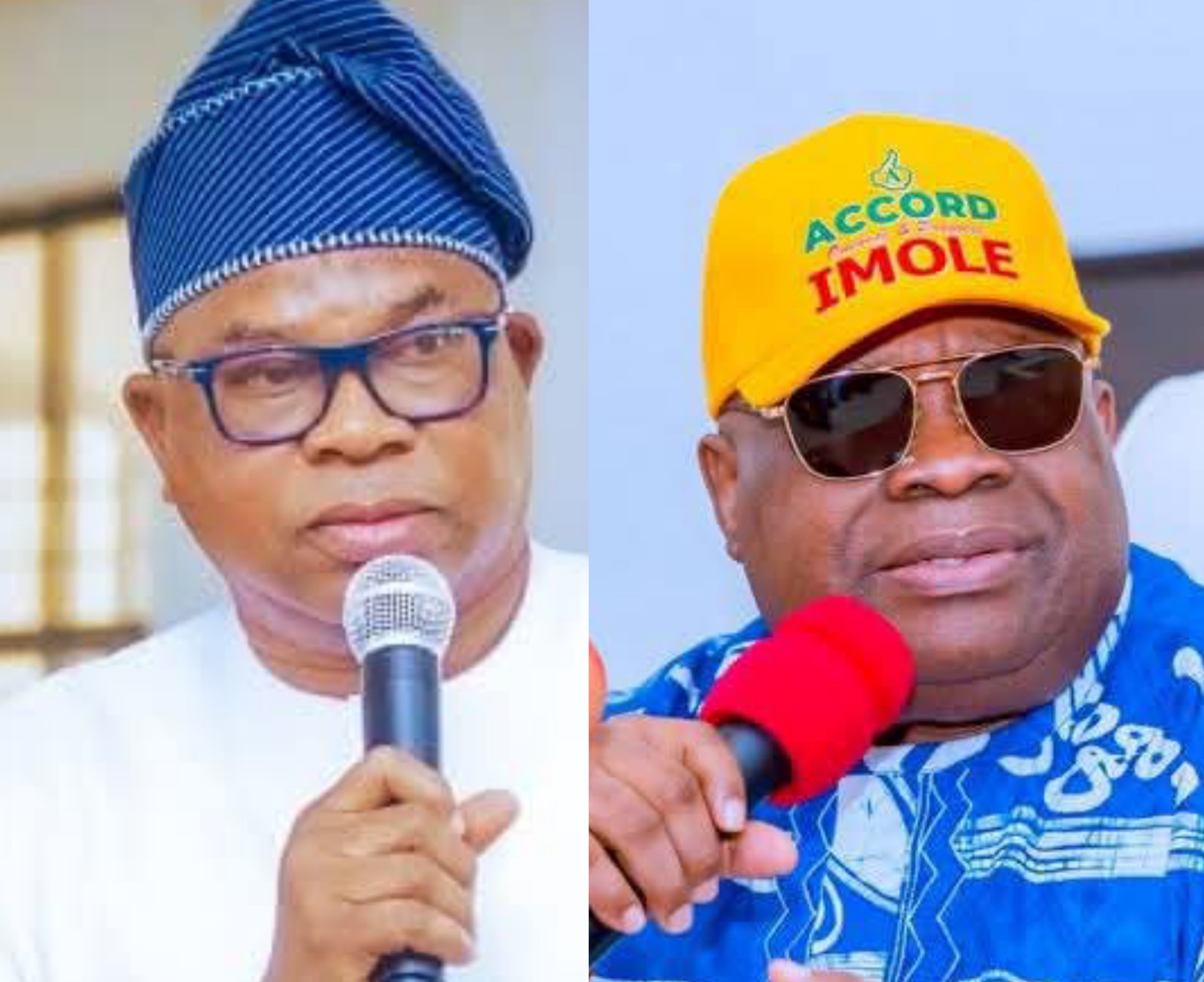
Oyebamiji and Adeleke
By Thomas Abidoye
The Independent National Electoral Commission (INEC) has adjusted the date for the Osun State governorship election, moving it from Saturday, August 8, 2026, to Saturday, August 15, 2026. This one-week shift forms part of a broader revision of the electoral timetable following the repeal of the Electoral Act, 2022, and the signing of the Electoral Act, 2026. The change has sparked fresh interest in the political landscape of Osun State, with key developments involving major party candidates and shifting alliances ahead of the poll.
As voters, political parties, and observers prepare for the rescheduled election, several critical issues have emerged. These include the reasons behind INEC’s decision, Governor Ademola Adeleke’s departure from the Peoples Democratic Party (PDP), the process that produced Bola Oyebamiji as the All Progressives Congress (APC) candidate, and the emergence of Najeem Salaam as the African Democratic Congress (ADC) flagbearer.
AMILOADED had earlier reported that INEC has announced the adjustment in Osun governorship election in a statement issued on February 26, 2026.
The National Commissioner and Chairman of the Information and Voter Education Committee, Malam Mohammed Kudu Haruna, explained the move as necessary for legal compliance.
He stated: “Following the repeal of the Electoral Act, 2022and the enactment of the Electoral Act, 2026, which introduced adjustments to statutory timelines governing pre-election and electoral activities, the Commission has reviewed and realigned the Schedule to ensure full compliance with the new legal framework.”
The revision also affected the 2027 general elections, shifting the presidential and National Assembly polls to January 16, 2027, and governorship and state assembly elections nationwide to February 6, 2027.
For Osun specifically, the commission noted that some preparatory activities for the off-cycle governorship election had already been completed under the previous law, but remaining processes would now follow the Electoral Act, 2026.
INEC confirmed that the new dates align with the 1999Constitution (as amended).The one-week postponement provides political parties and candidates with additional time for final campaign preparations and voter mobilisation. It also ensures full adherence to updated statutory timelines for primaries, candidate nominations, and other pre-election activities.
INEC has emphasised that political parties must strictly observe the revised calendar, with campaigns required to end 24 hours before polling day.
As part of its ongoing transparency measures, INEC has published the list of candidates and their running mates for the August 15 election. Fourteen parties submitted valid nominations, but notable absences include the PDP and the Labour Party, which did not field candidates.
Governor Ademola Adeleke’s Defection from PDP to Accord Party
One of the most significant political shifts in Osun State occurred in December 2026 when Governor Ademola Adeleke formally resigned from the Peoples Democratic Party (PDP) and joined the Accord Party. Adeleke, who won the 20222 governorship election under the PDP banner, announced his move to seek re-election on the new platform. INEC subsequently cleared him to contest the governorship poll under the Accord Party.
In his new party, Adeleke emerged as the governorship candidate through a consensus process. He was presented with a certificate of return after delegates endorsed him unanimously. The governor retained his current deputy as running mate for the election.
The defection gained further momentum on February 27, 2026, when 25 members of the Osun State House of Assembly, originally elected on the PDP platform, defected to the Accord Party. The group, which includes Speaker Adewale Egbedun, made the announcement after a parliamentary meeting and a formal declaration at the Banquet Hall in Osogbo, in the presence of Governor Adeleke and Accord Party leaders.
A statement issued by the Chief Press Secretary to the Speaker, Olamide Tiamiyu, explained the decision: “The lawmakers are convinced that Accord provides a more stable, inclusive and people-centred platform through which they can continue to serve the people of Osun State.”
The defectors cited their desire to reaffirm support for Governor Adeleke and ensure continuity in governance and accelerated development. With this move, the 26-member House now has only one remaining opposition lawmaker from the APC.
This realignment has consolidated support around Adeleke’s re-election bid and altered the balance of power in the state legislature ahead of the August 15 poll.
The Consensus Process and Dynamics Surrounding Bola Oyebamiji’s Emergence as APC Candidate
The All Progressives Congress (APC) selected Munirudeen Bola Oyebamiji, a former Managing Director of the National Inland Waterways Authority (NIWA) and ex-Commissioner for Finance in Osun State, as its governorship candidate through a consensus arrangement on December 13, 2025.
The primary, held at Ebunoluwa Group of Schools in Osogbo, was supervised by Edo State Governor Senator Monday Okpebholo as chairman of the APC governorship primary committee. Seven other aspirants had stepped down following a meeting with President Bola Tinubu at the State House in Abuja. A motion for Oyebamiji’s adoption as the sole candidate was moved by aspirants Kunle Adegoke (SAN) and Senator Babajide Omoworare. The motion was subjected to a voice vote, which received overwhelming support.
Chairman Okpebholo then declared: “By the power conferred on me, I present to you Bola Oyebamiji, as the governorship candidate of our party.” Over 1,660 delegates participated in the process, which was described as peaceful and unified.
The emergence involved internal party negotiations to achieve consensus, with multiple aspirants withdrawing to present a single flagbearer. On December 14, 2025, the Osun APC’s Director of Media and Information, Kola Olabisi, issued a statement claiming that Governor Adeleke appeared “jittery and restless” over Oyebamiji’s selection. The party noted that factors that favoured Adeleke in 2022 were no longer present. Oyebamiji has since selected former lawmaker Tunde Olatunji (who represented Ife North) as his running mate.
This process positioned the APC as a major contender, drawing on Oyebamiji’s experience in public service and finance.
Najeem Salaam’s Emergence as ADC Governorship Candidate
On December 15, 2025, former Speaker of the Osun State House of Assembly, Dr. Najeem Folasayo Salaam, secured the African Democratic Congress (ADC) ticket after a primary election in Osogbo.
A total of 528 delegates were accredited out of 535 expected (482 ward and local government delegates plus 53 special delegates). Salaam polled 520 valid votes, with eight votes declared invalid.
The ADC Primary Election Committee Chairman, Hon. Chukwuemeka Nwajiuba, announced the result: “The total number of votes scored by aspirant Najeem Folasayo Salaam is 520 votes.”
He added: “By the powers conferred on this panel by the constitution of the African Democratic Congress, I hereby declare Hon. Najeem Folasayo Salaam as the candidate-elect and flagbearer of the ADC for the 2026 Osun State governorship election.”
Salaam thanked party members for the mandate and pledged to carry every stakeholder along in the campaign. His candidacy has introduced a third major force in the race, with the ADC expected to leverage grassroots structures and experienced leadership.
Other Notable Developments and What Voters Should Monitor
INEC’s publication of candidate details confirms that the main contenders are Governor Adeleke (Accord Party), Bola Oyebamiji (APC), and Najeem Salaam (ADC), alongside a handful of other smaller-party candidates.
The one-week shift in the election date has been widely viewed as administrative rather than disruptive, giving all parties equal additional preparation time under the new legal framework.
Key issues likely to shape the campaign include governance records, infrastructure development, economic policies, and security. Voters will also watch how the realigned political structures, particularly the mass defection to Accord and the APC’s unified front, affect mobilisation efforts across the 30 local government areas.
Political analysts note that the rescheduled poll and the new Electoral Act provisions on result transmission and timelines could enhance credibility if strictly implemented. INEC has reiterated its commitment to a peaceful, credible, and inclusive exercise.
As the August 15, 2026, election approaches, Osun residents and stakeholders are urged to remain informed, participate actively within the law, and engage with the revised electoral calendar. The developments surrounding the date shift, party realignments, and candidate selections have set the stage for what promises to be a closely watched contest in the State of Osun.